
Tradebe develops a system for treating industrial wastewater that reduces energy consumption and waste generation
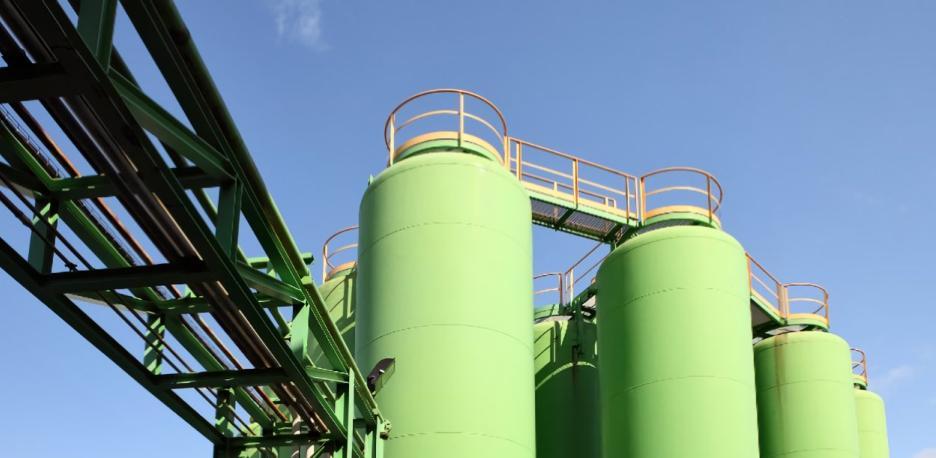
• The company has designed a solution that, through advanced technologies, enables the removal of certain persistent contaminants and reduces the use of raw materials and chemical reagents during the treatment process.
• To carry out this project, Tradebe Environmental Services received support from ACCIÓ (Department of Business and Labor) through €187,709 in funding from its business R&D project grant program.
• The solutions developed by the company have already been validated in a pre-industrial environment, and the company is assessing their feasibility for market implementation.
Tradebe Environmental Services (Sant Joan Despí, Baix Llobregat), specialized in environmental services, has developed an innovative industrial wastewater treatment system that reduces energy and raw material consumption, as well as waste generation resulting from the process. Specifically, the company has adapted and combined several advanced technologies for the treatment of wastewater streams that, due to their characteristics, present difficulties when treated using conventional systems.
To carry out this project, Tradebe Environmental Services received support from ACCIÓ, the agency for business growth within the Department of Business and Labor, through €187,709 in funding from its business R&D project grant program.
According to Joan Triquell, Development Engineer and project lead at Tradebe Environmental Services, “traditional aerobic biological processes use microorganisms to degrade contaminants present in wastewater and waste streams. To do so, they require a continuous oxygen supply through aeration systems that involve a certain level of energy consumption. In addition, they generate biological sludge that must subsequently be managed as waste, especially in the treatment of wastewater and organic waste with high salinity, where recovery alternatives are often limited,” he notes.
With the solutions developed by the company, “it is possible to treat these same waste streams in a more sustainable and efficient way, achieving reductions in energy consumption of up to 60%,” Triquell states.
One of the technologies adapted by Tradebe Environmental Services as part of the project uses an electroactive biofilter made of a porous and conductive material that promotes interaction between microorganisms and contaminants present in wastewater. This support medium provides optimal conditions for microorganisms to carry out their degradation activity more efficiently and with a lower oxygen demand.
According to Triquell, “this methodology allows microorganisms to degrade contaminants using only the oxygen available in the environment and with limited growth, making it possible to avoid the sludge generation associated with conventional biological treatments while minimizing energy consumption and waste generation.”
The second method is based on electro-oxidation technologies, which take advantage of the high salinity of certain wastewater streams and waste materials to generate oxidizing species capable of degrading specific compounds through the application of electrical energy.
The technologies have been successfully validated in a pre-industrial environment using wastewater from hazardous waste management operations and from the canned food and cured products industries, and Tradebe is currently studying their industrial-scale implementation.
Among the main results is a reduction of more than 99% of PFOA (perfluorooctanoic acid), a type of persistent contaminant detected in certain industrial wastewater streams and others originating from controlled landfill sites. In addition, the company has succeeded in reducing by more than 50% the consumption of raw materials used in the treatment process, such as activated carbon, and has successfully replaced chemical reagents such as sodium hypochlorite in the cases analyzed.
Tradebe Environmental Services, one of Tradebe’s business lines, specializes in environmental services, the management and treatment of industrial wastewater and liquid waste, and resource recovery. In Spain, it employs more than 600 professionals and operates nearly 30 facilities and sites. Internationally, it has more than 2,200 employees and a presence in the United States, the United Kingdom, Spain, Ireland, Italy, and France. The business line generated revenues of more than €620 million globally during the last year.
Tradebe, founded in 1984 and headquartered in Sant Joan Despí, employs more than 3,000 people and operates more than 100 facilities and sites worldwide. The company reported revenues exceeding €830 million in 2025. Tradebe structures its activities around four business lines: Environmental Services, Life Sciences, Health & Nutrition, and Port Services.
Might be interested in